
Most people don't think about tent pegs until they're kneeling in the dark trying to fix one that's pulled out and bent.
It happens on the second night. Always the second night. The first night is fine; soft ground, light wind, no drama. Then the weather turns, or you move to a harder site, or you realise the peg you hammered in three days ago is no longer holding.
Peg selection matters. It might look like it will do the job on the camping store shelf.
Here's the honest rundown on every type of tent peg available in Australia — what each one does well, where each one falls short, and how to know which one belongs in your kit.
The three main types of tent peg
Standard metal hammer-in pegs
The classic. You've used them. Your parents used them. They come bundled with most tents and are sold at every camping store, servo, and hardware aisle in the country.
They work. In the right conditions, they absolutely work.
Softer ground, light loads, calm conditions; a standard hammer-in peg does exactly what it needs to do. If you're pitching an inner tent on a grassy campsite with nothing heavier than a tarp overhead, these will see you through the weekend.
The problems start when conditions change.
Hard-packed clay, rocky soil, or sun-baked outback conditions will bend a standard steel peg before it reaches depth. You hit resistance and push through anyway, because that's what you do, and you end up with a curved piece of metal that's neither in the ground properly nor easy to get back out.
Removal is the other issue. A hammer-in peg that's been completely hammered in. Anyone who's tried to pry one out with a tent pole will know how that story ends.
They're also not condition specific. The same peg that works in soft soil is the same one you're trying to force into hard ground. There's no design variation; no peg can be designed to work well in such a wide range of varied conditions – it's just metal and hope.
✓ Best for: Light tents in soft or grassy ground. Low wind loads. Short stays.
✗ Fails at: Hard, rocky, or dry-packed ground. Heavy anchoring. Wet conditions where the peg seizes on removal.
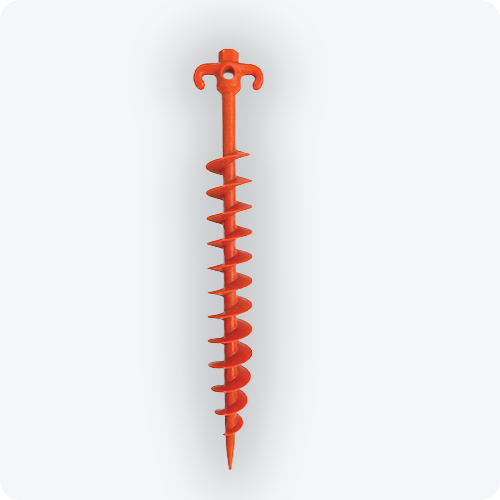
Plastic screw-in pegs
These have been popular in European camping markets for years and they've made their way to Australia.
The concept is sound. A screw mechanism gives the peg actual bite into the ground rather than just poking a hole and relying on friction. For that reason, a plastic screw-in peg is meaningfully better than a standard hammer-in peg in some conditions.
The strongest argument for plastic screw-ins is weight. If you're hiking in and carrying every gram of your kit, a lightweight plastic peg makes real sense. The weight saving over metal is genuine, and for ultralight camping setups, that matters.
The main limitation, being plastic in Australian conditions, the thread is easily damaged by wear in rocky ground and is prone to breaking in harder ground. Load tolerance is also much lower than stainless steel. Plastic screw-in pegs are fine for inner tent tie-outs and light-duty anchoring in softer ground. For holding a caravan awning in wind, or securing a large shelter on exposed ground, they're working against their design limits.
✓ Best for: Ultralight camping and hiking setups where weight is the priority. Light duty anchoring in soft to medium ground.
✗ Fails at: Hard or rocky ground. High-load applications like awnings and large shelters. Extended Australian sun exposure over multiple seasons.
Metal screw-in pegs
This is a big and varied category. A handful of different brands, Australian and international, sit here.
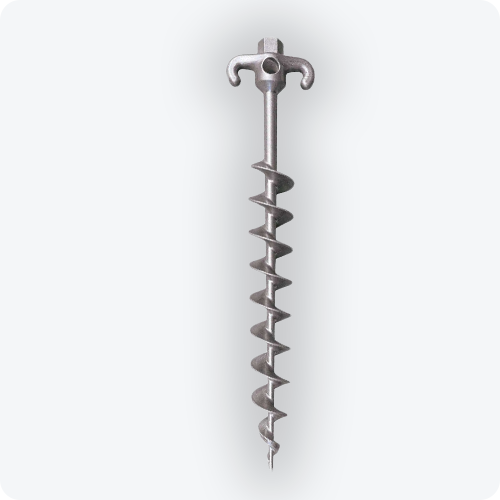
The step up from plastic to metal is real. A metal screw-in peg with a properly designed thread bites into the ground in a way that plastic and hammer-in pegs simply can't match. Removal is easier — you unscrew, you leave a clean hole, the peg comes out in the condition it went in.
For the majority of Australian camping conditions, a decent metal screw-in peg is a significant improvement on what most people are using.
What varies between brands in this category is worth checking before you buy:
Steel grade: Standard steel rusts. Not immediately, but after a season or two of wet ground, storage in a damp bag, and Australian coastal humidity, standard steel shows it. Stainless steel doesn't have that problem.
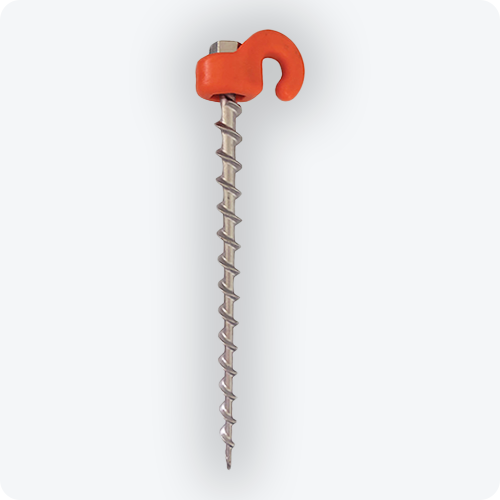
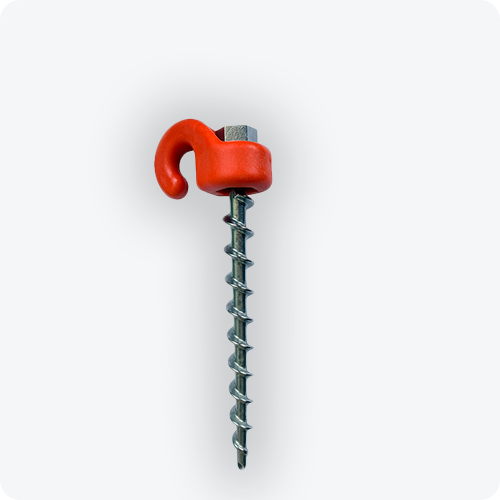
Design: The intended use of the design pays a big part, there are many “screw in tent pegs” on the market that are simply baton screws with a plastic “hook” – baton screws are designed to screw into wood, while they may work in very hard ground, any other conditions they simply fail.
Socket compatibility: Some brands use proprietary socket sizes. If your different pegs need different sockets, you're carrying extra tools and replacing whichever one you inevitably lose.
A good metal screw-in peg is a solid upgrade on whatever came with your tent or awning.
✓ Best for:Limited conditions — a slightly better upgrade from hammer-in or plastic.
✗ Watch out for: Standard steel grade that rusts over time. limitations across varied ground types. Proprietary socket sizing and special tools.
Then you have Ground Dogs
More than screw-in pegs, Ground Anchor Systems that work!
We're obviously not neutral on this one. So here's how we'll play it: the genuine advantages, the honest limitations, and then you can decide.
At Ground Dogs we know that one Ground Anchor can’t cover all conditions you are likely to encounter, that’s why we make five distinct designs — each one engineered for a specific ground type and job.
The Ground Dog
Construction: Stainless Steel
Length: 250mm
Tapered Shaft: 10mm to 4mm
Width: 18mm
Hex Head: 19mm
Compatible Collars: Hook Collar, Wing Collar, Stainless Steel Collar
Ground types: Mixed conditions from grass covered sandy soil to rock hard ground.
Use: General use, caravan awnings, tents, gazebo’s, trampolines, anything where solid anchoring is required.
The Tuff Dog
Construction: Stainless Steel
Length: 180mm
Tapered Shaft: 10mm to 6mm
Width: 18mm
Hex Head: 19mm
Compatible Collars: Hook Collar, Wing Collar, Stainless Steel Collar.
Ground types: Grass covered sandy soil to extreme, rock-hard ground.
Use: Designed for use in the harshest conditions, Ideal for 4x4 Awnings, privacy screens.
The Big Dog
Construction: Aluminium Alloy
Length: 350mm
Tapered Shaft: 12mm to 4mm
Width: 40mm
Hex Head: 19mm
Compatible Collars: Stainless Steel Collar.
Ground types: Muddy, ultra soft conditions and hard packed sand.
Use: Designed for use where regular pegs can’t get a grip.
The Sand Dog
Construction: Fiberglass reinforced Nylon
Length: 450mm
Shaft: 15mm
Width: 50mm
Hex Head: 19mm
Compatible Collars: Stainless Steel Collar.
Ground types: Sand.
Use: Purpose built for use in beach sand.
The Ground Puppy
Construction: Stainless Steel
Length: 120mm
Shaft: 6mm
Width: 10mm
Hex Head: 19mm
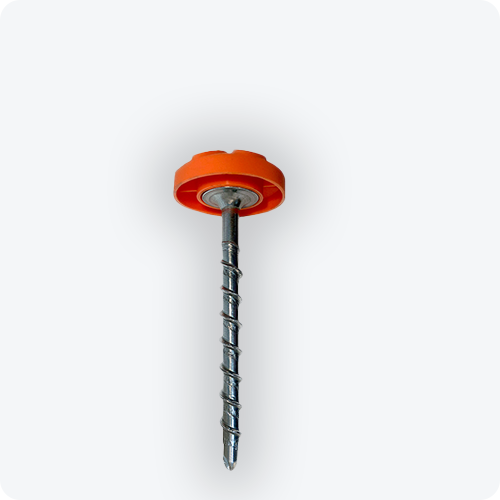
Safety Cap: bright orange Safety Cap to prevent stubbing a toe.
Ground types: Grass covered sandy soil to extreme, rock-hard ground.
Use: Designed for securing flooring mats and lightweight gear
One socket, the whole range. Every Ground Dog Ground Anchor has a 19mm hex head. One socket — the one that comes in every kit — fits all of them. No sorting through adaptor sets on a windy afternoon.
The kit is the system. Individual pegs are one thing. The Touring Pack and Caravan Anchoring Kits pull the right pegs, springs, straps, socket, and bag together into a complete anchoring system. The pegs are the engineered components. The kit is the answer.
One honest limitation: The upfront cost is higher than plastic or generic alternatives. Installation is also easiest with a standard drill — never an impact driver, which voids the warranty. A hand-tool option exists for drill-free install, and it works, but a drill is faster. If you're remote without power, plan for that.
✓ Best for: Caravan and motorhome awnings. Large shelter setups. Variable or difficult ground types. Multi-condition trips. Anyone who wants to buy it once and not think about it again.
✗ Not optimised for: Ultralight hiking where weight is the primary concern.
The honest comparison
| Feature | Standard metal | Plastic screw-in | Other metal screw-in | Ground Dogs |
|---|---|---|---|---|
| Holds in hard ground | ✗ Bends | ✗ | ✓ Mostly | ✓ Engineered for it |
| Holds in sand | ✗ | ✗ | ~ Depends on design | ✓ Sand Dog purpose-built |
| Holds in soft / wet ground | ~ Soft only | ✗ | ~ | ✓ Big Dog purpose-built |
| Lasts multiple seasons | ✗ Rusts / bends | ✗ UV / brittle | ~ Depends on steel grade | ✓ Stainless |
| Removes cleanly | ✗ Seizes | ~ | ✓ | ✓ Extremely Easy |
| One tool fits entire range | ✓ Hammer | ✓ Usually | ✗ Often proprietary | ✓ 19mm hex head, all pegs (same size as stabiliser legs) |
| Condition-specific designs | ✗ | ✗ | ✗ Mostly single-design | ✓ Five Ground Anchors |
| Kit system available | ✗ | ✗ | ✗ | ✓ Application specific kits |
| Australian-engineered | ✗ | ✗ | ✗ | ✓ |
What about cost? the buy-once argument.
The upfront price difference is real. A bag of standard pegs costs very little. Plastic screw-ins are affordable. Even generic so called “screw in pegs” metal pegs are low cost.
Here's a question worth asking: How many times do you replace them and will they let me down at the worst possible time?
Standard metal pegs bend and rust. Most people lose a few each trip and replace the bag every couple of seasons. Plastic pegs crack and degrade — in the Australian sun, you might get two or three seasons before the threads are stripping. Generic metal pegs vary, but if they're not stainless, corrosion is a timeline question, not an if question.
Ground Dog Ground Anchors are stainless steel. They don't bend under normal use. They come out the way they went in. The canvas zip bag that comes with every kit makes looking after them straightforward, you're buying them once.
So which peg do you actually need?
If you're pitching a tent on a manicured campsite in light conditions, standard hammer-in pegs are fine. Save the money.
If you're hiking and counting grams, a lightweight screw-in — plastic or lightweight metal — is a sensible call. Ground Dog Anchors aren't built for that application.
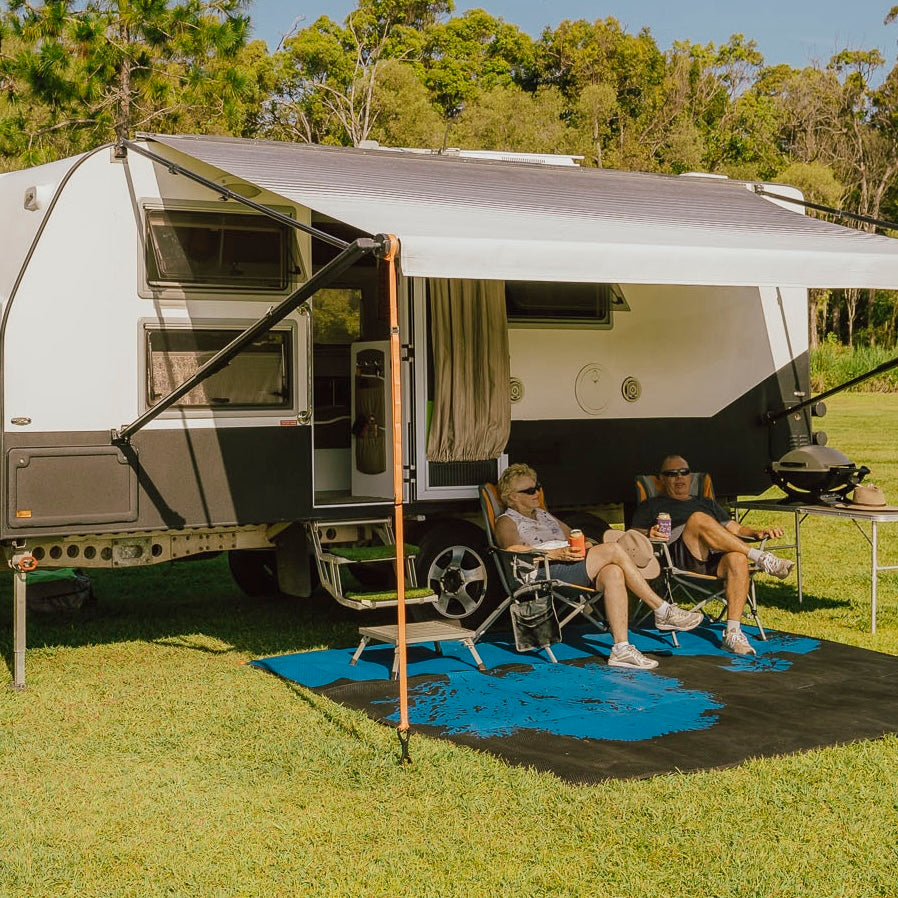
If you're doing anything more serious — a caravan, motorhome, a large awning, any setup where a peg failure costs you thousands and a ruined trip — the condition-specific metal ground anchor is the right answer. Ground Dogs specifically, because the range covers every ground type you'll actually encounter across a season of Australian travel.
And if you're not sure what ground you'll be on — which is true for most of the Big Lap, most of Queensland, most of the NT, and every trip where you book sites as you go — the Touring Pack solves that problem entirely. You bring the right ground anchor for whatever you find.
One kit. Every condition. That's the point.
The Touring Pack is how this all comes together. It's not a bag of pegs — it's a complete anchoring system with condition-specific pegs, all engineered to work together with safety springs, tie down straps.
You pull up to a site. You check the ground. You pick the right peg. You drill it in, clip on the safety spring, run the tie down straps. Done. Pack up in five minutes when you're ready to move.
That's the experience the kit is designed to deliver — not "we make pegs," but "we make the part of your setup that you used to think about at midnight."
You call them screw in pegs, we call them Ground Anchors that work!
The complete caravan anchoring system.
Five ground types. One kit. Built for Australia.
Free shipping on orders over $200.
See the Touring Pack →